A Special Warfare Shipmate Is Recognized
by Capt John Chamberlain
I attended an awards ceremony last Monday to recognize the courage and valor of a Navy SEAL that was killed performing a mission in the Northern Gulf of Tonkin in June 1972. I represented the Grayback crew at the ceremony. I would like to give you a short summary of the action and the awards ceremony because I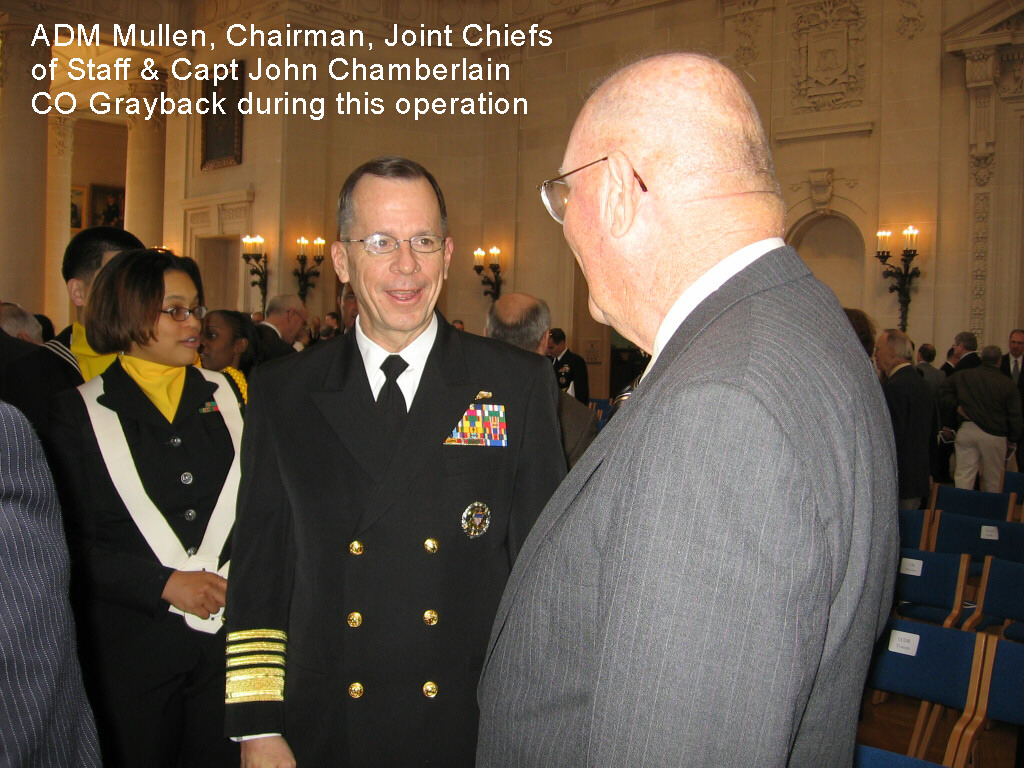
believe that all Grayback crewmen might be interested, not just the ninety men and thirty troops who were embarked in Grayback on that fateful mission. Grayback operated in the
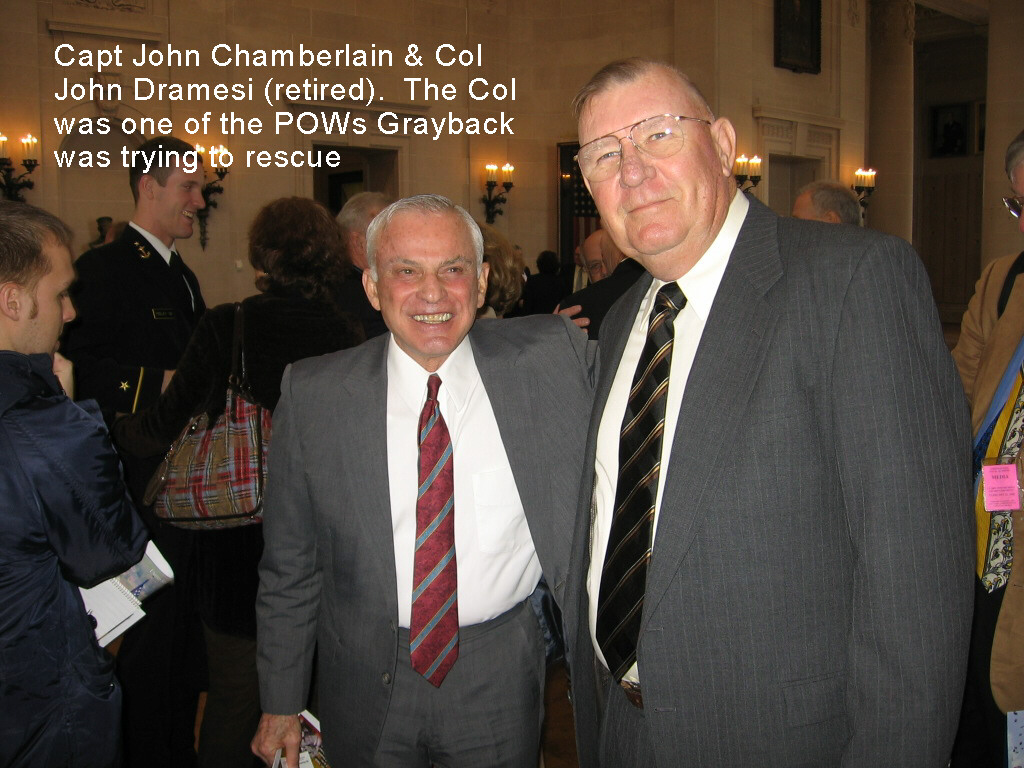
Northern Gulf of Tonkin during the first two weeks of June 1972 in an operation called “Thunderhead”. The ships involved included Grayback, bottomed about 4,000 yards off the mouth of the Red River in about 65 feet of water. USS Long Beach stood off the shore about fifteen miles and controlled various surveillance and rescue aircraft. The object of Operation Thunderhead was to rescue prisoners of war that were supposed to escape from a North Vietnam prison during the time frame that Grayback was on station. Embarked in Grayback were elements of the UDT detachment that drove the Swimmer Delivery Vehicles, and
Platoon “A” of SEAL Team One that were to do the actual rescue of the POWs when they emerged from the Red River in some type of native boat. After bottoming and surveying the bottoming site, it was decided to wait a day before launching reconnaissance by SDV. The tidal currents and the tidal range were greater than predicted from available hydrographic data making SDV operations very challenging. After careful briefings, the first SDV reconnaissance was launched in the early evening with Lt. Melvin Spencer Dry in command. Even though the launch was conducted at slack water, the four knot SDV could not cope with the two knot coastal current that eventually began to flow.
The SDV was swept to the south until it ran out of battery. Lt Dry kept his men together for eight hours, scuttled the SDV so that it would not be captured, and swam to seaward awaiting a rescue.
Grayback requested a rescue helo when the SDV did not return and the SDV crew was picked up at dawn about ten miles south of Grayback’s position. That day in debriefings aboard USS Long Beach, Lt Dry reported the adverse conditions and insisted that he be allowed to return to Grayback as his experience and knowledge was needed in the planning of further missions. The helo drop of the rescued SDV crew went badly when the helo was unable to attain the proper speed and height parameters for a successful drop of the crew.
Lt Dry decided he was needed in Grayback and launched his four member team out of the helo to the position of the Grayback.
Lt Dry was killed on impact and the other three members of team were injured and swept to the south with the current. Warrant Officer Moki Martin, second in command, kept the three injured men and the body of Lt Dry together until they were once again rescued by helo at dawn. Grayback stayed on station and in position to rescue the POWs but the SDVs were not used again.
The SEALS were organized into rescue parties that could be deployed by rubber boat or directly from the deck of Grayback, depending on the tactical situation at the time of rescue. The mission continued successfully until it was learned that the escape had been abandoned because of conditions at the prison and in the waterways that were to be used for escape.
 A number of Grayback crew received awards as a result of the operation. The SEALS were in the Special Warfare chain-of-command and I assumed at the time that they would be recommended for combat awards by their own command. It wasn’t until 2005, more than thirty years later, that I learned that Lt Dry’s death had been classified as a training accident and none of the embarked troops had been recognized for the operation. In conjunction with some of his Naval Academy classmates and special warfare warriors, I submitted a recommendation for a Bronze Star with combat V for Lt Dry. The deadline for submission of Vietnam awards had come and gone. Extensive liaison, pushing, pulling, and politicking were needed before the award was approved early this year. Capt (retired) Gordon Peterson, one of Spence Dry’s Naval Academy classmates, was a moving force in advancing the award until it was approved. The award ceremony was conducted in Heritage Hall at the U. S. Naval Academy at 1400 on
Monday, February 25, 2008. It was as impressive a ceremony as I have ever attended. The Naval Academy Band played martial music before and after the ceremony. There were over 200 guests including Dr. Pete Farmer from Grayback, our diving medical officer who was aboard for Operation Thunderhead. Three SEALS from Platoon Alfa that were embarked in Grayback were in attendance: Rick Hetzell, Bob Hooke, and Frank Sayle. More than twenty Naval Academy of the Class of 1968, Spence’s classmates, were in attendance. A large group of midshipmen that have selected Navy Special Warfare duty were lined up in the back of the hall. The guest speaker was Admiral Mike Mullen, Chairman Joint Chiefs of Staff! Robert Dry, Spence’s brother, received the Bronze Star on behalf of the Dry family. There were about fifteen of the Dry Family present. After the ceremony, a bountiful reception was held at the Naval Academy Officer’s Club. As I mentioned before, I have never attended an award ceremony with more pomp, tradition, senior guests or emotion.
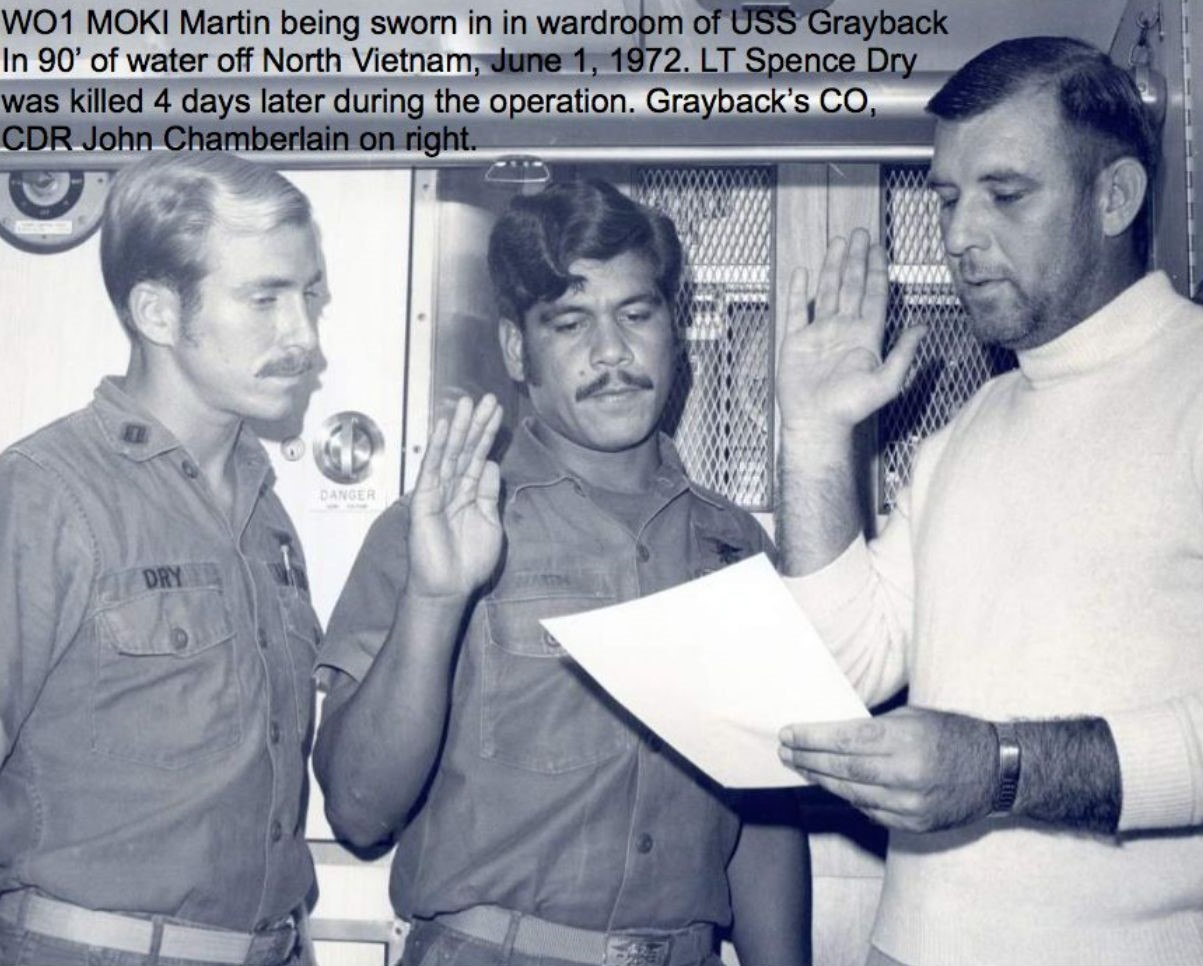 I’m sorry that all of you could not have been there! Warrant Officer Moki Martin will receive a
Navy Commendation Medal with combat V at 1000 on March 18, 2008 at the Naval Special Warfare
Command in Coronado, California.
I hope to see all of you at the Grayback reunion in San Diego in September 2009.
Best regards to each of you,
John Chamberlain